Prospector's Vault
NWA 17273 Meteorite Specimen Official L5 Melt Breccia Northwest Africa Meteorite
NWA 17273 Meteorite Specimen Official L5 Melt Breccia Northwest Africa Meteorite
Couldn't load pickup availability
An authentic specimen of the officially classified Northwest Africa 17273 (NWA 17273) meteorite, a rare L5 melt breccia approved in Meteoritical Bulletin 114 (2025). This meteorite is a large, visually striking individual stone recovered from Niger in 2024, representing one of the 57 officially approved L5 melt breccia meteorites.
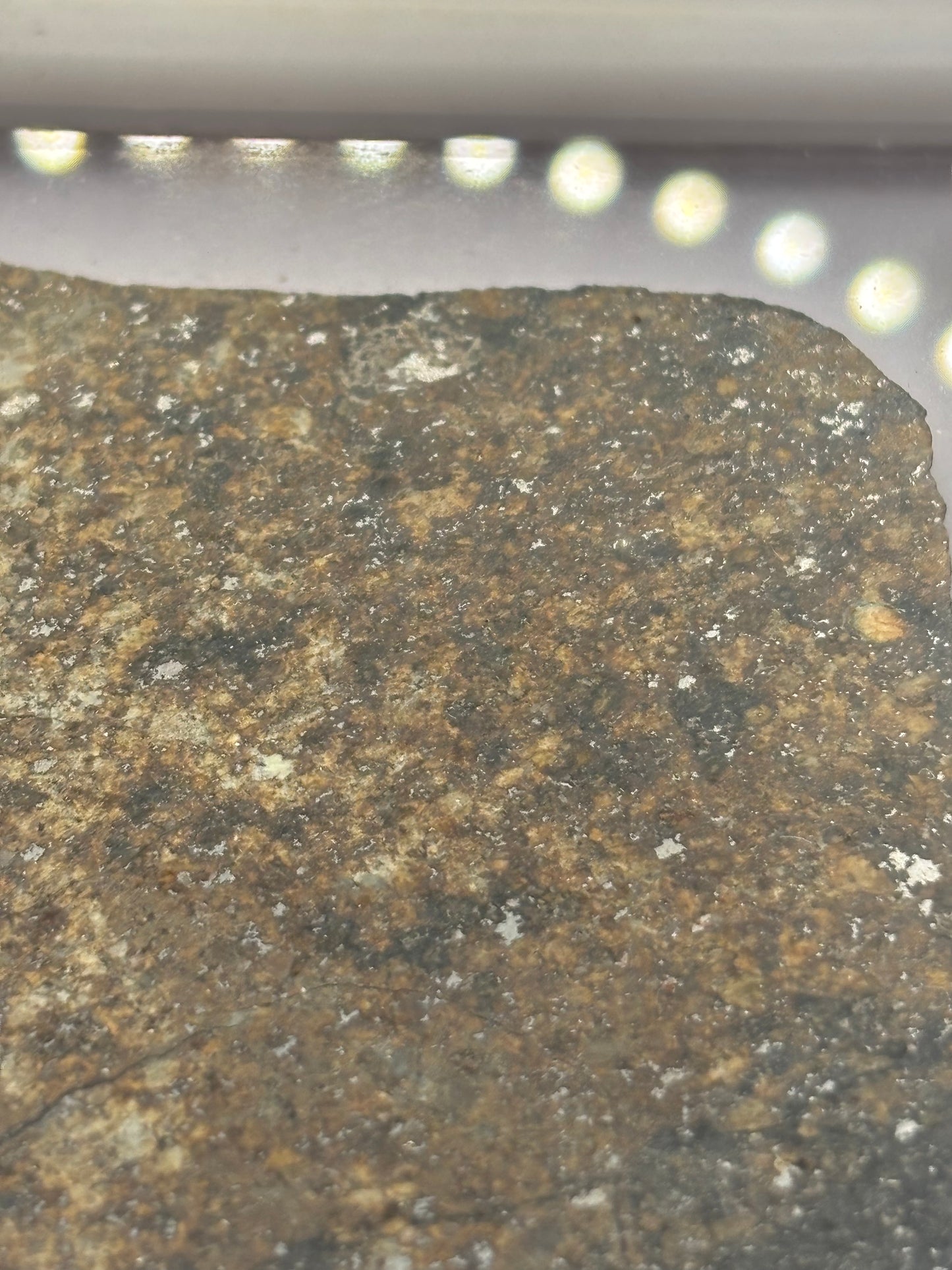
This 22.5 kg specimen exhibits the distinctive characteristics of melt breccias, where fragments of chondritic material are bound within a dark, glassy melt matrix. Visible metallic inclusions of kamacite and taenite, along with sulfides such as troilite and accessory chromite, enhance both the scientific and display appeal of this meteorite. Macroscopic flow-like structures in the melt and brecciation within clasts create visually dynamic textures that are highly prized by collectors.
Official Classification
- Name: Northwest Africa 17273 (NWA 17273)
- Country: Niger
- Year Found: 2024
- Classification: Ordinary Chondrite (L5 Melt Breccia)
- Total Known Weight: 22.5 kg
- Pieces: 1
- Official Publication: Meteoritical Bulletin 114
- Classifier: J.T. Mitchell, University of Minnesota
Scientific Highlights
- Chondritic clasts <2.2 cm in diameter
- Dark, glassy impact melt matrix
- Visible chondrules (BO and RP types)
- Metal content ~4.6 vol%
- Olivine Fa24.5–27.1, Pyroxene Fs21.8–28.9 Wo1.2–1.7
- Chromite Chm85.3–86.7, Kamacite 7 wt% Ni, Taenite 27.2 wt% Ni
- Macroscopic flow-like structures and brecciation faults
Ideal For
- Advanced meteorite collections
- L-chondrite and melt breccia collections
- Planetary science displays
- Museum and educational exhibits
- Large display or study specimens
Measurements & Weight
- Dimensions: 57 x 52 x 0.4 mm
- Weight: 33.5g
Condition
Please review all photos carefully. The meteorite is a natural extraterrestrial object and may display fractures, oxidation, and brecciation consistent with terrestrial recovery and its melt breccia structure.
Share