Prospector's Vault
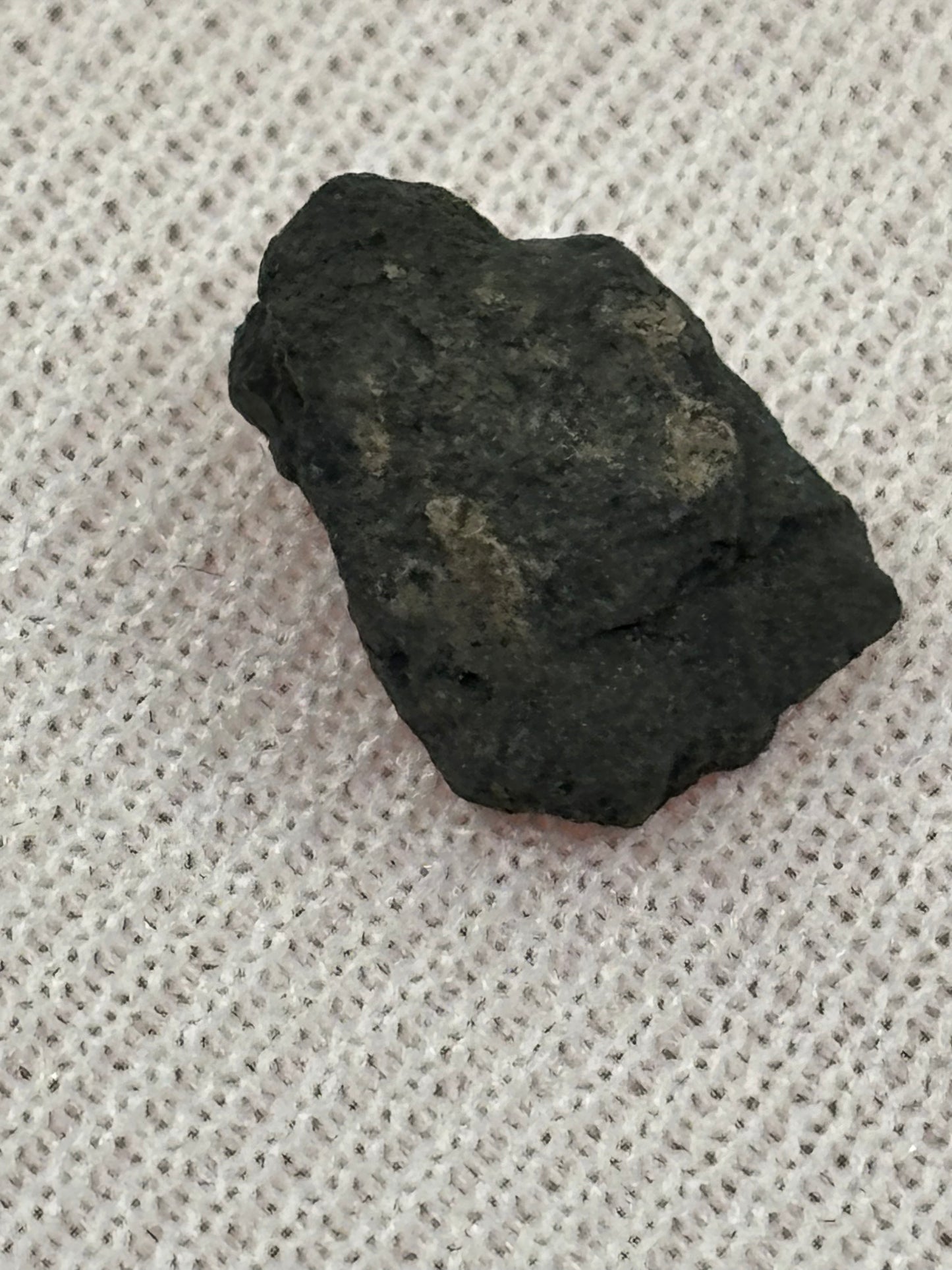
Kolang Meteorite Specimen Historic 2020 Confirmed Fall Official Hammer Stone CM1/2 Carbonaceous Chondrite
Kolang Meteorite Specimen Historic 2020 Confirmed Fall Official Hammer Stone CM1/2 Carbonaceous Chondrite
Couldn't load pickup availability
An authentic specimen of the historic Kolang meteorite, an officially classified CM1/2 carbonaceous chondrite from the confirmed 2020 fall in North Sumatra, Indonesia. Kolang rapidly became one of the most scientifically important and highly sought-after modern carbonaceous chondrite falls due to its rarity, complex brecciated structure, and exceptionally primitive mineralogy.
On August 1, 2020, residents across northwest Sumatra reported loud detonations and ground-shaking sonic booms before meteorites impacted near the village of Kolang. The main mass reportedly crashed through the roof of a home before embedding itself in the soil beside the structure. Additional stones were recovered from a nearby rice paddy and surrounding region.
Provenance: Ex Michael Farmer collection.
Official Classification
- Name: Kolang
- Country: Indonesia
- Year Fell: 2020
- Observed Fall: Confirmed
- Classification: Carbonaceous Chondrite (CM1/2)
- Total Known Weight: Approximately 2.55 kg
- Official Publication: Meteoritical Bulletin 109
Physical Characteristics
Official reports describe: dark gray to black interior, highly brecciated structure, visible breccia fragments, regmaglypts on the main mass, hydrous mineral alteration, greenish-gray clasts, and CAI inclusions.
Scientific Composition
Scientific analysis identified: serpentine, tochilinite, cronstedtite, calcite, pyrrhotite, pentlandite, altered chondrules, and hydrous silicates.
The meteorite displays exceptionally complex brecciation and mineralogical diversity, including multiple distinct lithologies and alteration states. One reported clast even contained a large calcium-aluminum-rich inclusion (CAI), making Kolang especially important to researchers studying primitive carbonaceous material.
Why Kolang Is Especially Desirable
- Confirmed modern witnessed fall
- Extremely rare CM1/2 classification
- Very limited total recovered mass (~2.55 kg)
- Primitive carbonaceous composition
- Highly brecciated structure
- Scientifically important hydrous alteration features
Unlike ordinary chondrites, CM carbonaceous meteorites are prized for: primitive mineralogy, carbon-rich composition, hydrous alteration phases, brecciated textures, and rare early solar material preservation.
Depending on specimen type, Kolang material may display: dark carbonaceous matrix, brecciated clasts, regmaglypts, impact textures, visible chondrules and inclusions, and primitive alteration features.
Ideal For
- Carbonaceous chondrite collectors
- Witnessed fall collectors
- Advanced meteorite collections
- Planetary science researchers
- Museum and educational displays
- Collectors of rare primitive meteorites
A remarkable extraterrestrial artifact connected to one of the rarest and most scientifically important modern carbonaceous meteorite falls ever recovered.
Measurements & Weight
- Dimensions: 0.9 x 0.6 x 0.4 cm
- Weight: 0.253g
Condition
Please review all photos carefully for overall condition, fractures, brecciation, weathering, regmaglypts, and natural surface characteristics, as they are considered part of the description. Meteorites are natural extraterrestrial objects and commonly display fractures, friable matrix regions, oxidation, and atmospheric entry textures.
Share