Prospector's Vault
Holbrook Meteorite Nininger Pea Specimen ASU Collection Historic 1912 Arizona Observed Fall L/LL6
Holbrook Meteorite Nininger Pea Specimen ASU Collection Historic 1912 Arizona Observed Fall L/LL6
Couldn't load pickup availability
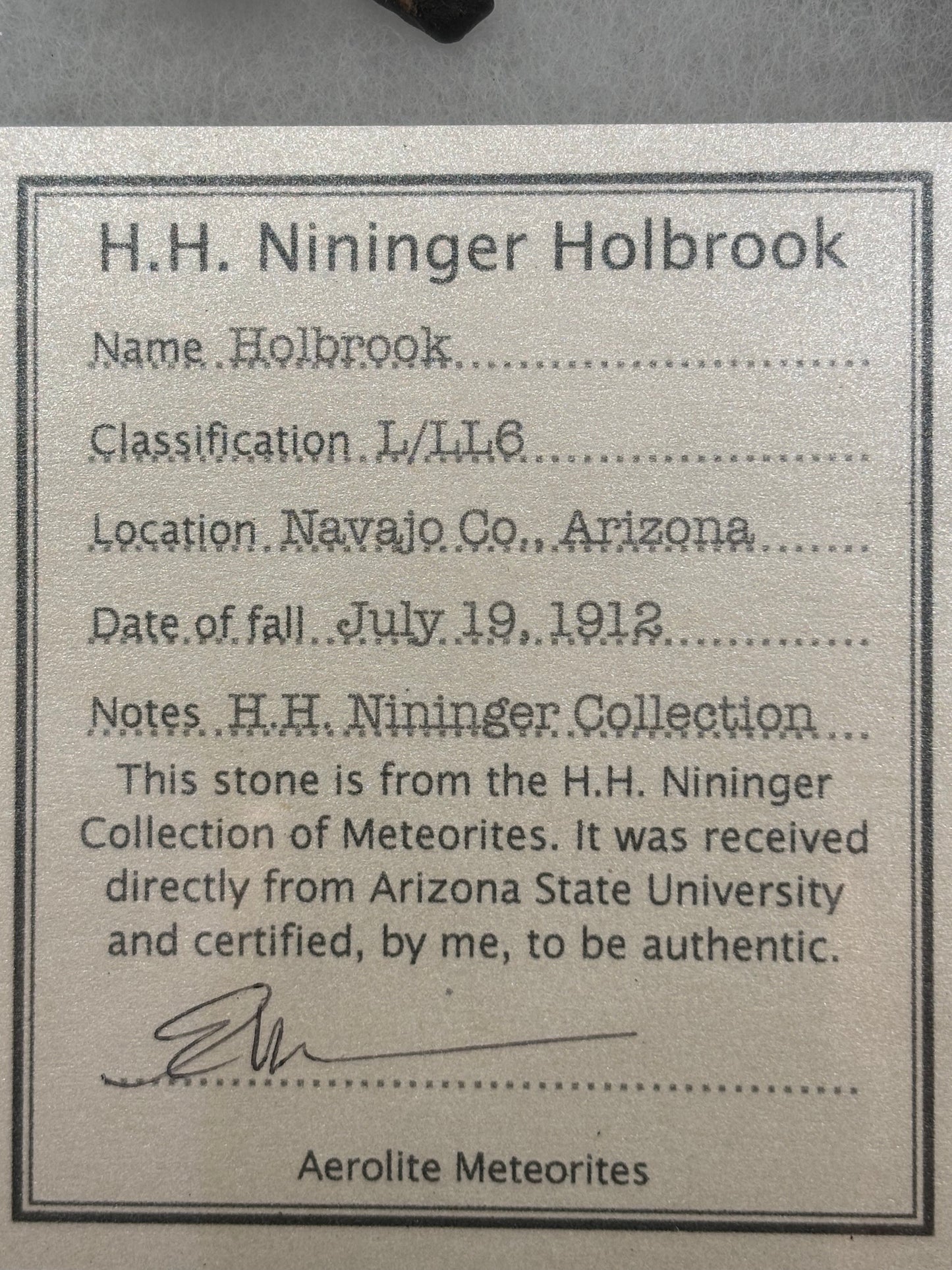
An authentic "Nininger pea" specimen from the historic Holbrook meteorite fall, one of the most famous witnessed meteorite events in American history. This specimen originates from the Arizona State University meteorite collection and was obtained through Aerolite Meteorites, carrying exceptional collector and institutional provenance.
Holbrook fell near Holbrook, Arizona on July 19, 1912, producing one of the most extensively documented meteorite showers in the United States. Thousands of small stones reportedly rained across the Arizona desert, startling local ranchers and livestock as sonic booms echoed across the region.
This particular specimen is referred to as a "Nininger pea" — a collector term commonly used for the small individual Holbrook stones famously collected and distributed through the efforts of pioneering meteorite researcher Harvey H. Nininger, often regarded as the father of modern meteorite collecting in the United States. Holbrook "pea" individuals have become iconic within the meteorite hobby due to their historical importance, classic appearance, and strong connection to early American meteoritics.
Official Classification
- Name: Holbrook
- Country: United States
- State: Arizona
- Observed Fall: Yes
- Year Fell: 1912
- Classification: L/LL6 Ordinary Chondrite
- Total Known Weight: Approximately 220 kg
- Recommended Classification: L/LL6
Provenance
- Arizona State University Meteorite Collection
- Obtained through Aerolite Meteorites
Why Holbrook Meteorites Are Highly Sought After
- Historic witnessed fall status
- Famous Arizona locality
- Strong connection to Harvey Nininger
- Classic small fusion-crusted individuals
- Importance in early meteorite research
- Enduring collector demand
Specimen Features
Depending on the specimen, Holbrook peas may display:
- Black fusion crust
- Rounded atmospheric entry shaping
- Regmaglypts and thumbprinting
- Light gray interior matrix
- Natural desert weathering textures
Ideal For
- Observed fall collectors
- Arizona meteorite collectors
- Nininger history enthusiasts
- Classic American meteorite collections
- Museum and educational displays
- Planetary science collections
A historic extraterrestrial artifact from one of the most legendary meteorite falls ever recovered in the American Southwest.
Condition
Please review all photos carefully for overall condition, fusion crust, weathering, fractures, and natural surface features, as they are considered part of the description. Meteorites are natural extraterrestrial objects and commonly display irregular surfaces, oxidation, and natural atmospheric entry characteristics.
Share