Prospector's Vault
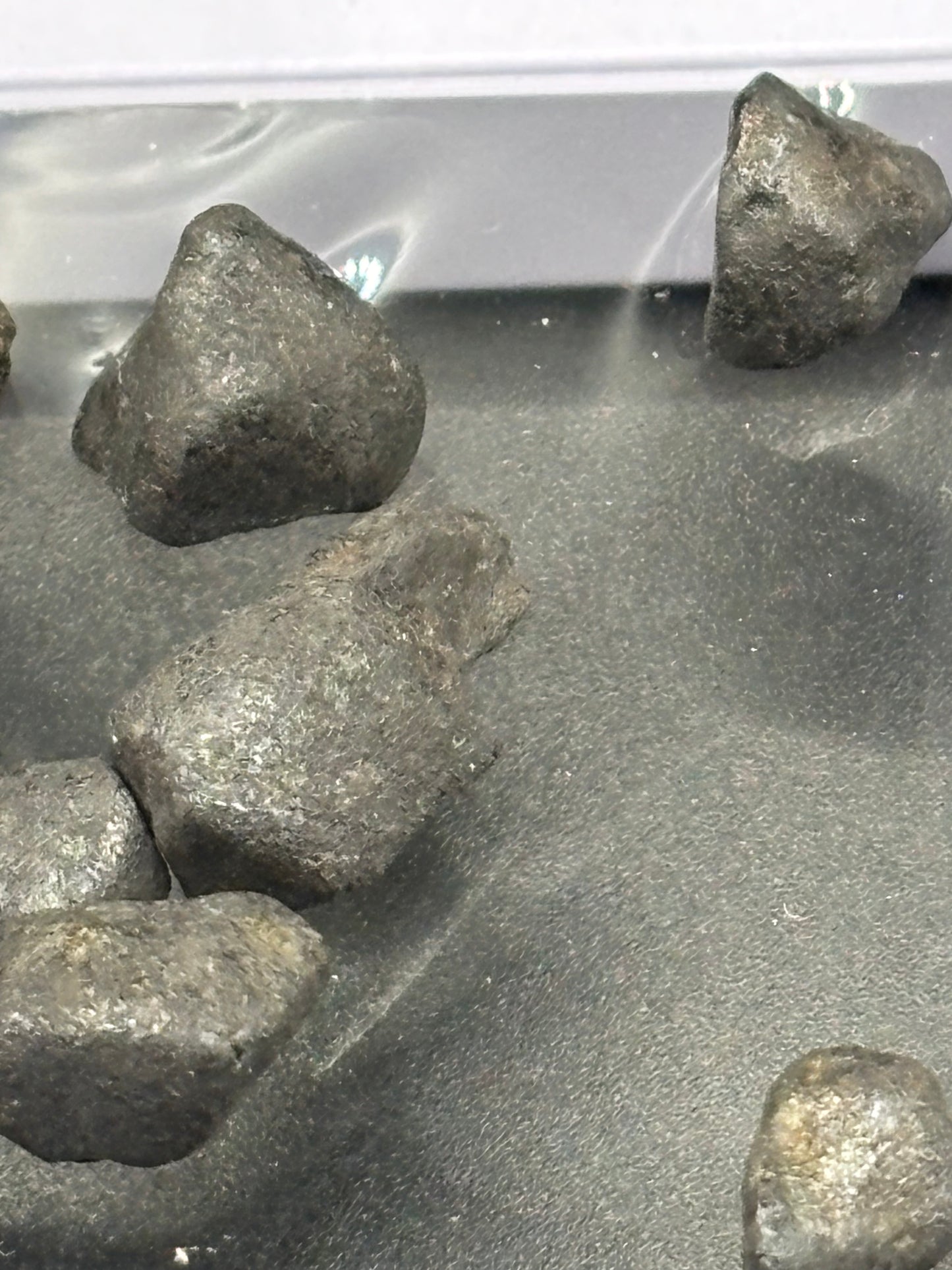
Chelyabinsk Meteorite Specimens "Baby Chelys" Lot - Historic 2013 Observed Fall Official LL5 Russia Meteorite
Chelyabinsk Meteorite Specimens "Baby Chelys" Lot - Historic 2013 Observed Fall Official LL5 Russia Meteorite
Couldn't load pickup availability
An authentic specimen of the historic Chelyabinsk meteorite, one of the most famous and widely documented meteorite falls in modern history. Officially classified as an LL5 ordinary chondrite, Chelyabinsk fell over Russia on February 15, 2013, producing a massive atmospheric explosion witnessed by millions and captured on countless cameras and dashboard videos worldwide.
The Chelyabinsk event became one of the most significant modern meteorite falls ever recorded after a brilliant fireball streaked across the skies over the Chelyabinsk region of Russia before detonating with tremendous force in the atmosphere. The resulting shockwave shattered windows across surrounding cities and drew worldwide scientific attention.
Official Classification
- Name: Chelyabinsk
- Country: Russia
- Year Fell: 2013
- Observed Fall: Yes
- Classification: Ordinary Chondrite (LL5)
- Shock Stage: S4
- Weathering Grade: W0
- Official Publication: Meteoritical Bulletin 102
Physical Characteristics
Official reports describe: thousands of recovered stones, fresh black fusion crust, light and dark lithologies, visible shock veins, impact melt material, abundant chondrules, and fresh low-weathering interiors.
Scientific Composition
Scientific analysis identified: olivine and orthopyroxene, impact melt lithologies, troilite and FeNi metal, chromite, ilmenite, Cl-apatite, and extensive shock features.
The meteorite shower produced a massive strewnfield across the Chelyabinsk region, while the largest recovered mass — approximately 540 kg — was later recovered from Chebarkul Lake after breaking through the frozen ice surface during the fall. Official recovery efforts eventually recovered approximately 1 metric ton of meteorite material from both land and lake recovery operations.
Why Chelyabinsk Is Especially Desirable
- Globally famous observed fall event
- Extensively documented atmospheric explosion
- Fresh fusion-crusted material
- Visually dramatic shock features
- Scientifically important impact melt lithologies
- Historic modern meteorite fall provenance
Depending on specimen type, Chelyabinsk material may display: black fusion crust, shock-darkened regions, impact melt veins, light/dark brecciated textures, visible chondrules, and regmaglypts and atmospheric sculpting.
Ideal For
- Observed fall collectors
- Historic meteorite collections
- Modern meteorite event collectors
- Educational and museum displays
- Planetary science collections
- Space and astronomy enthusiasts
A remarkable extraterrestrial artifact connected to one of the most historically significant meteorite events of the modern era.
Condition
Please review all photos carefully for overall condition, fusion crust, fractures, shock veins, weathering, and natural surface characteristics, as they are considered part of the description. Meteorites are natural extraterrestrial objects and commonly display fractures, atmospheric entry features, and impact-related textures.
Share