Prospector's Vault
Budulan Mesosiderite Meteorite Specimen Rare Official Mesosiderite-B4 Stony-Iron Meteorite Russia
Budulan Mesosiderite Meteorite Specimen Rare Official Mesosiderite-B4 Stony-Iron Meteorite Russia
Couldn't load pickup availability
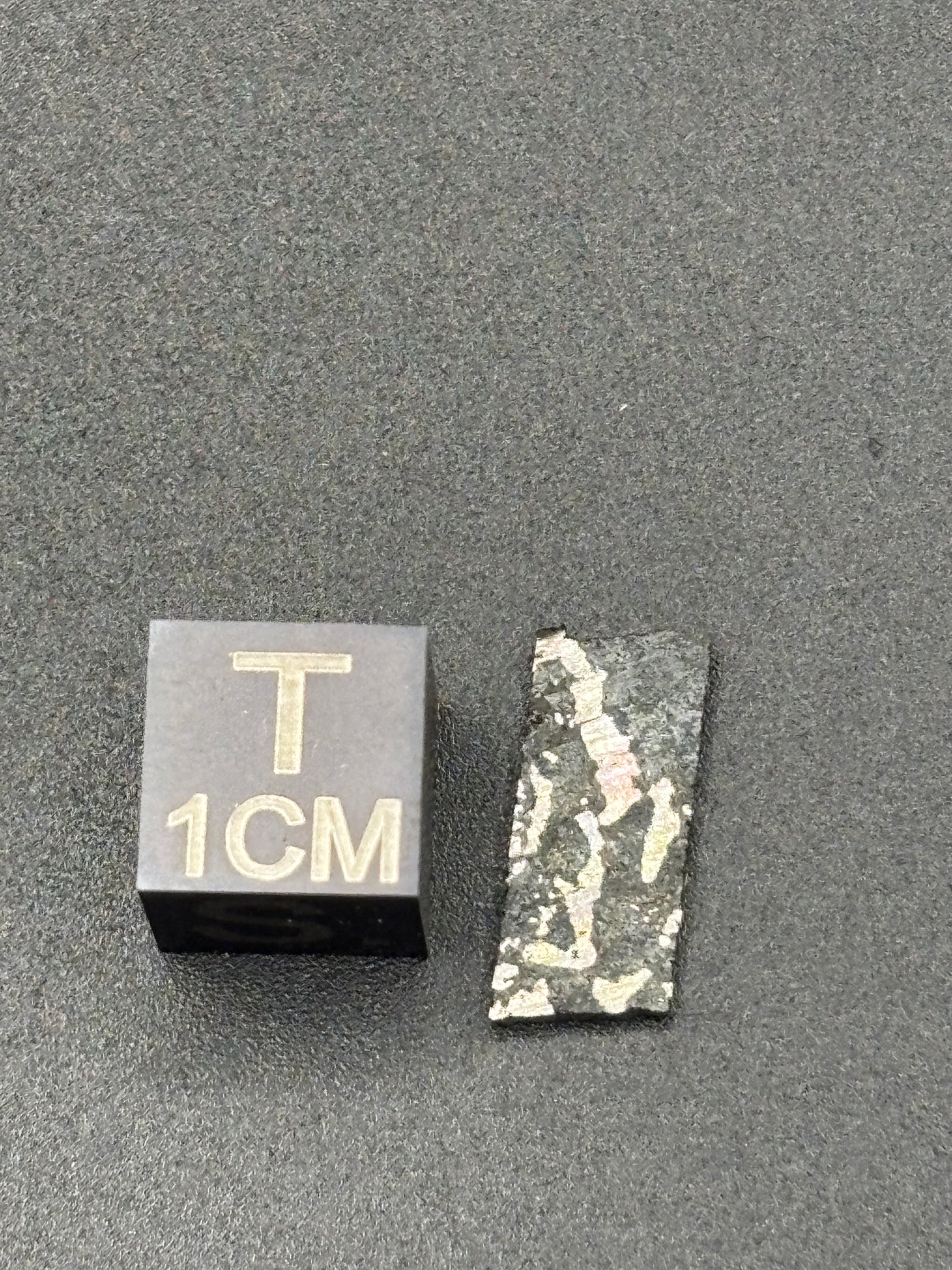
An authentic specimen of the rare Budulan meteorite, an officially classified Mesosiderite-B4 stony-iron meteorite discovered in Russia in 1962. Budulan belongs to one of the most visually fascinating and scientifically important meteorite classes known — mesosiderites — rare impact-brecciated meteorites composed of roughly mixed silicate rock and iron-nickel metal formed during catastrophic asteroid collisions early in solar system history.
Officially classified as a Mesosiderite-B4, Budulan occupies an exceptionally scarce subgroup with only a very small number of approved meteorites worldwide sharing this classification.
Official Classification
- Name: Budulan
- Country: Russia (USSR)
- Region: Buryat National District, Chita Region
- Year Found: 1962
- Classification: Mesosiderite-B4
- Total Known Weight: Approximately 100 kg
Discovery History
The meteorite was discovered during geological survey work by geologist N. N. Chaban approximately 15 km west of the village of Budulan. Reports indicate the meteorite had penetrated the ground to roughly three-quarters of its height before recovery and was subsequently transferred to the Committee on Meteorites of the USSR Academy of Sciences in Moscow.
Why Mesosiderites Are Among the Most Spectacular Meteorites
Mesosiderites contain:
- Iron-nickel metal
- Silicate minerals
- Brecciated impact textures
- Mixed asteroid crust and core material
- Evidence of violent asteroid collisions
Specimen Features
Budulan specimens may display:
- Metallic iron matrix
- Silicate clasts
- Brecciated stone-metal textures
- Polished stony-iron structure
- Complex impact mixing patterns
Mesosiderites are believed to form during massive asteroid impacts that violently mixed crustal silicates with molten metallic core material, creating one of the most dynamic meteorite textures known in planetary science.
Specimen Details
- Size: 15 × 6 × 0.1 mm
- Weight: 0.57 g
- Provenance: Ex: Vivenzio; Ex: Bliss
Ideal For
- Advanced meteorite collectors
- Mesosiderite specialists
- Rare meteorite type collections
- Stony-iron meteorite collections
- Planetary science institutions
- Museum-quality extraterrestrial collections
A remarkable extraterrestrial artifact representing catastrophic asteroid collisions from the earliest formation period of the solar system.
Condition
Please review all photos carefully for overall condition, metal content, silicate structure, oxidation, cut surfaces, and preparation characteristics, as they are considered part of the description. Meteorites are natural extraterrestrial objects and commonly display oxidation, brecciation, fractures, and structural variation from impact history and terrestrial exposure.
Share